

7 Daily Habits to Calm Nervous System Naturally
Some days feel strangely loud, even when nothing dramatic is happening. You move through work, errands, and dinner, yet your body still feels tight, restless, and worn out.
That’s often what a stressed nervous system feels like. It’s your body’s control center for the parasympathetic nervous system (the “rest and digest” state) and your response to stress, and it can stay stuck in “on” mode after too much pressure, stimulation, or go-go-go living. The good news is that simple routines can help your body feel safe again.
You don’t need a perfect morning, a perfect diet, or a perfect bedtime routine. You only need a few daily habits to calm nervous system strain for better nervous system regulation in ways you can repeat.

Key Takeaways
- A dysregulated nervous system often feels like subtle tension from modern life stressors; simple daily habits signal safety to shift into rest-and-digest mode.
- Start mornings with deep breathing before screens and gentle movement or light exposure to set a calmer tone for the day.
- Steady habits like balanced breakfasts, hydration, tiny resets, time outside or grounding, and evening wind-downs build repetition that eases strain over time.
- Focus on small, repeatable cues rather than perfection—lifestyle basics support nervous system regulation more than one-time fixes.
- Extra gentle supports like magnesium can help, but prioritize one or two habits first for lasting calm and resilience.
Why your dysregulated nervous system may feel on edge all day

When your nervous system is overloaded, the signs are not always dramatic. Sometimes it looks like poor sleep, brain fog, irritability, tight shoulders, shallow breathing, or that tired but cannot relax feeling. These are specific physical signs of an overworked system.
Often, the body is reacting to ordinary modern life, which frequently triggers a state of chronic stress. A packed schedule, too much screen time, skipped meals, constant noise, and caffeine on an empty stomach can all keep the sympathetic nervous system active, raising cortisol levels unnecessarily and affecting HPA axis balance. Even fun things, like travel or a busy social week, can leave your system overstimulated.
This is why stress can feel confusing. You may tell yourself, “I’m fine,” while your body says otherwise.
Still, your body can learn a calmer rhythm. Recent 2026 wellness guidance keeps pointing back to the same basics: slower breathing, gentle movement, time outside, steady meals, and simple wind-down cues. Small signals of safety, repeated often, can shift how you feel over time.
Calm usually comes from repetition, not from doing everything right.
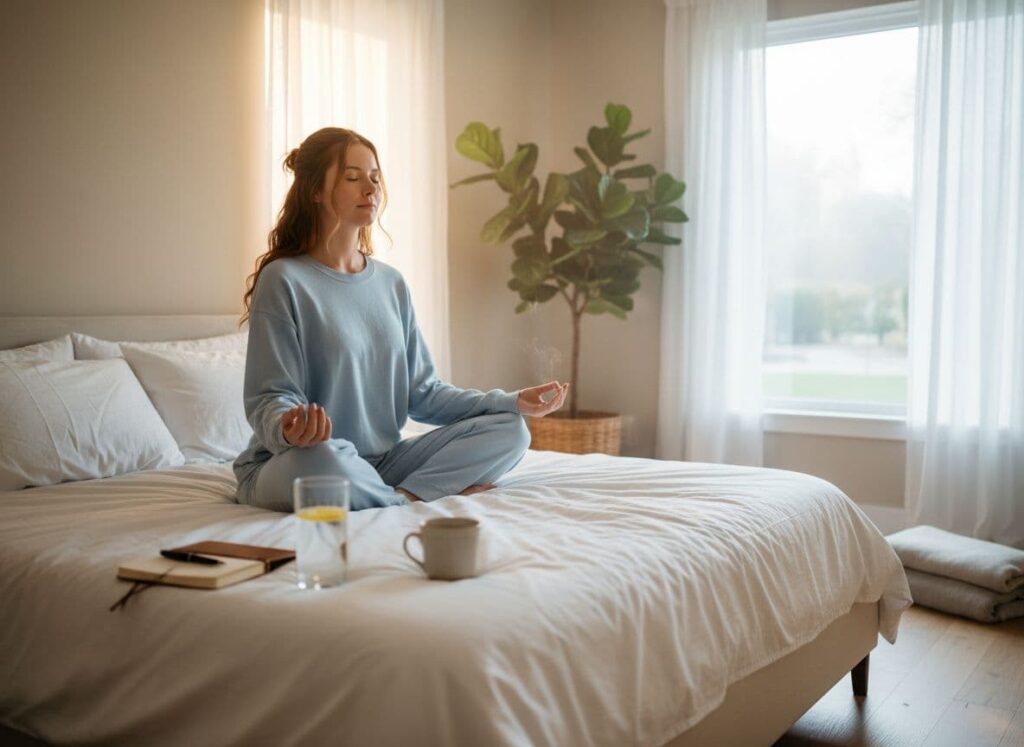
Start the day by giving your body a sense of safety
Your morning routine often shapes the tone of the whole day. If the first thing you do is rush, scroll, or brace for bad news, your body may stay tense for hours.
So think of these first habits as anchors, not rules. They’re simple ways to start from steadier ground.
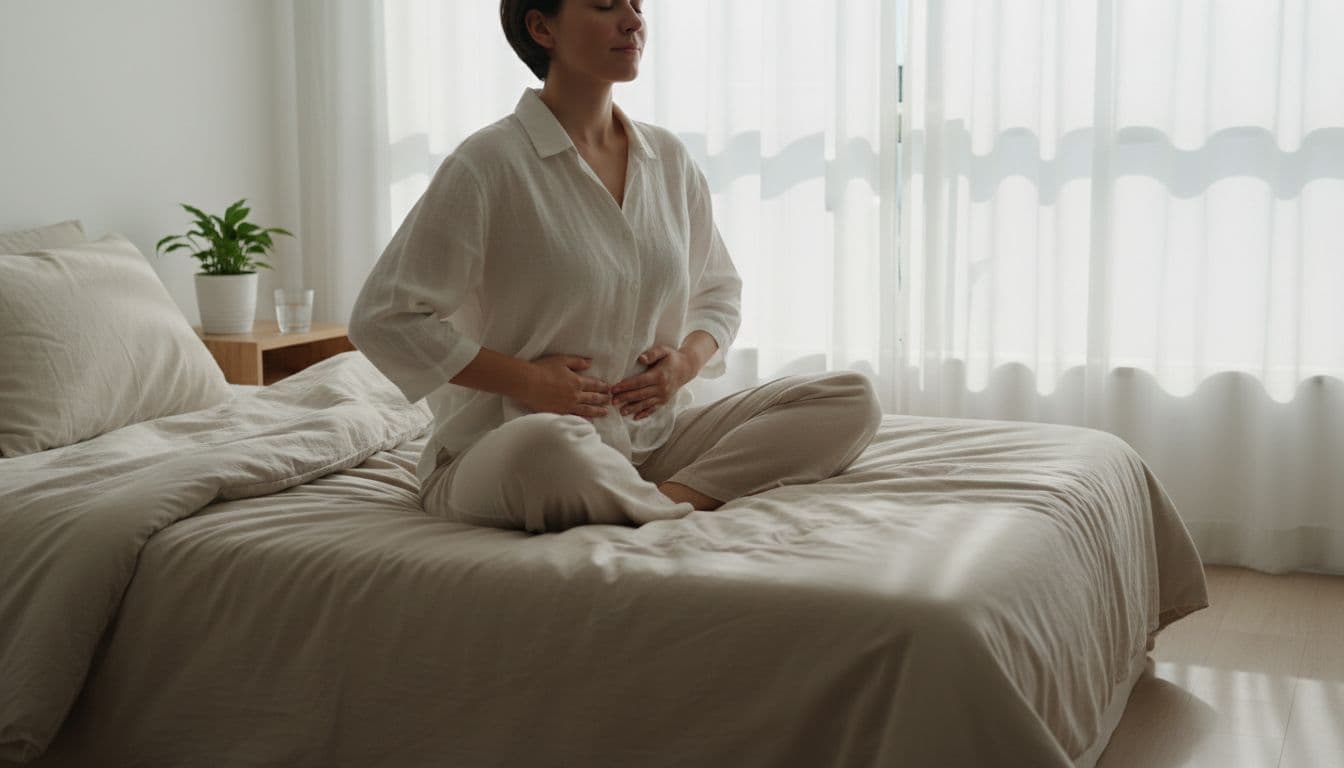
Habit 1: Take two minutes for deep breathing before you check your phone
Before email, texts, or headlines, pause for one or two minutes. Breathe in through your nose for four counts, then breathe out for six. This deep breathing helps stimulate the vagus nerve to signal safety, telling your body it can soften a little.
If you like structure, try box breathing instead: inhale for four, hold for four, exhale for four, hold for four. Keep it gentle. This is not about forcing a deep breath.
You can do this while sitting up in bed, in a chair, or standing in the kitchen. What matters most is doing it before the flood of apps, alerts, and tasks.
### Habit 2: Get morning light and gentle movement as early as you can
Next, let your body know that the day has started. Morning light helps set your circadian rhythm, which can support better energy now and better sleep later.
This doesn’t need to be a workout. A short walk outside, a few simple yoga stretches by the window, or five minutes of moving around the kitchen all count. You could step onto the porch with your coffee, walk the dog around the block, or stretch while the toaster runs.
Gentle movement also helps with stress management by releasing some of the tension that builds overnight. Think of it like shaking a snow globe and then setting it down. Your mind may still be busy, but your body gets a chance to settle into the day.
Use food, water, and breaks to stay steady instead of frazzled
A stressed body usually feels worse when it’s underfed, dehydrated, or running on caffeine alone. That doesn’t mean you need strict food rules. It means basic care matters more than most people think.
These habits work because they support nervous system regulation and help maintain steady blood pressure levels by reducing strain before it stacks up.
Habit 3: Eat a balanced breakfast that keeps your energy more even

Breakfast doesn’t have to be big, fancy, or ultra-healthy. It simply needs to help you feel more steady.
A good mix of protein, fiber, and healthy fat can support more even energy. That might look like eggs and toast with avocado, Greek yogurt with berries and nuts, or oatmeal with peanut butter and fruit. If mornings are rushed, a smoothie with protein, fruit, and chia seeds can do the job.
Skipping breakfast can leave some people shaky, headachy, or short-tempered by midmorning. If you’re not hungry right away, that’s okay. Start with something small within an hour or two, then see how your body responds.
Habit 4: Drink water throughout the day, especially before more caffeine
Dehydration can feel a lot like stress. You may notice headaches, low energy, dry mouth, or that edgy, depleted feeling that makes everything seem harder. Proper hydration counters these effects and supports your overall calm.
Start simple. Drink a glass of water when you wake up. Keep a bottle at your desk. Pair water with meals and snacks so you don’t have to remember it from scratch each time.
Caffeine isn’t bad, but too much can make an already stressed body feel even more activated. If coffee is your comfort, keep it. Try adding water before your second cup, not instead of it.

### Habit 5: Build tiny reset breaks into your day so stress does not pile up
Most people don’t need a full hour off. They need small pauses before tension turns into overwhelm. These tiny reset breaks serve as essential mindfulness practices that help maintain emotional resilience throughout a busy day.
Stand up once an hour. Drop your shoulders. Unclench your jaw. Take five slow breaths. Look away from the screen. Step outside for two minutes if you can. These tiny resets interrupt the build-up of stress before it gets too loud.
If you work at a desk, link a break to a calendar alert or bathroom trip. If you’re parenting or managing a busy home, reset during a microwave beep, while the kids wash hands, or right after you unload groceries. Short breaks count because they tell your body, again and again, that it doesn’t have to stay braced all day.
Create calming signals in the afternoon and evening
By late afternoon, many people feel wrung out and overstimulated, as their body has been in a fight-or-flight response all day. This is a good time to give your body a sensory reset with cues that the pressure is easing.
You don’t need a full self-care routine. You need a few actions your body can trust.
Habit 6: Spend a few minutes outside or use grounding when life feels too loud
Fresh air can change the feel of a hard day. A short walk, a few quiet minutes on the porch, or even standing in the yard can pull you out of mental noise and back into your senses.
If going outside isn’t possible, grounding works well indoors too. Press both feet into the floor. Notice the chair under you. Name five things you see, four you can touch, three you hear, two you smell, and one you taste. This 5-4-3-2-1 technique, one of several effective grounding techniques, helps bring attention back to the present moment.
When your thoughts are racing, grounding acts like a hand on your shoulder. It doesn’t solve every problem, but it can lower the volume. If you want a few more low-pressure ideas, these natural calming techniques offer simple examples.

### Habit 7: End the day with a simple wind-down ritual your body can trust
Night works better when it has a shape. A short wind-down ritual helps your body stop guessing whether the day is still going. These safety signals allow the brain to transition into rest and promote quality sleep, which is vital for improving heart rate variability over time.
Try dimming the lights, stretching for five minutes, taking a warm shower, sipping herbal tea, or writing down three good things from the day. You could also put your phone away 20 to 30 minutes before bed. That small gap matters more than people expect.
Warmth can be calming too. A shower, a mug, or a blanket can signal comfort in a quiet, physical way. Most of all, repetition matters. Even a 10-minute routine can help if you do it often enough.
If stress still feels sticky, that doesn’t mean you’re doing it wrong. It may simply mean your body needs more time and gentler signals.

Frequently Asked Questions
What does a dysregulated nervous system feel like?
It often shows up as poor sleep, brain fog, irritability, tight muscles, shallow breathing, or feeling tired but wired. These subtle signs come from chronic low-level stress like packed schedules, screens, or skipped meals keeping the sympathetic system active. Your body may feel on edge even when life seems fine.
Why do these small habits work to calm the nervous system?
They act as repeated safety signals that stimulate the vagus nerve and parasympathetic response, countering fight-or-flight mode. Habits like deep breathing, grounding, and steady nourishment help regulate cortisol, HPA axis balance, and heart rate variability without overwhelm. Repetition over perfection lets your body learn a calmer rhythm naturally.
How do I start if my days feel too busy for new habits?
Pick just one morning habit, like two minutes of breathing, and one evening cue, such as dimming lights. Link resets to existing routines, like water after waking or a walk during lunch. Small actions repeated daily build calm without adding pressure.
Can supplements help along with these habits?
Gentle options like magnesium or omega-3s can support at night, especially if sleep feels off. Start with lifestyle habits first, then add one simple extra if needed—avoid piling on. The goal is sustainable care your body trusts.
How long until I notice a difference?
Changes build gradually with consistency; some feel steadier energy in days, while deeper calm like better sleep may take weeks. Your body needs time to respond to these safety cues. If stress lingers, go smaller and gentler.
If you want extra support, keep it gentle and simple

Lifestyle habits come first because they shape how you feel all day. Still, some people like a little extra support, especially at night.
That might mean magnesium, omega-3 fatty acids, herbal tea, or a simple bedtime supplement. There’s no need to pile on five new things at once. Pick one of these daily habits to calm nervous system first, let it settle in, and only add something else if it feels useful.
The best support is the kind you can stick with without pressure. If you want more ideas in that same low-stress spirit, this list of gentle nervous system habits stays focused on simple daily care.
Feeling calmer rarely comes from one magic fix. It usually grows from a handful of steady cues that tell your body, day after day, that it can ease up.
When you feel wired for no clear reason, go smaller, not bigger. Start with one morning habit and one evening habit, then let repetition do the work.
Over time, those small signals of safety can lead to better sleep, steadier energy, and a quieter mind. The goal of these daily habits to calm nervous system is long-term health, as they support the HPA axis and build overall emotional resilience.