

Some days your mind feels like a house with every light on, every screen buzzing, and no door you can close. If you’ve been trying to calm an overstimulated mind, you probably don’t need more pressure or a perfect routine. You need less noise, less input, and one small thing that helps right now.
Overstimulation can sneak up on you. A few hours of notifications, errands, bright lights, bad sleep, and too many decisions can leave you feeling wired, foggy, and oddly fragile.
The good news is simple. You can feel steadier with gentle shifts, not heroic ones. Start small, and let your system catch up.
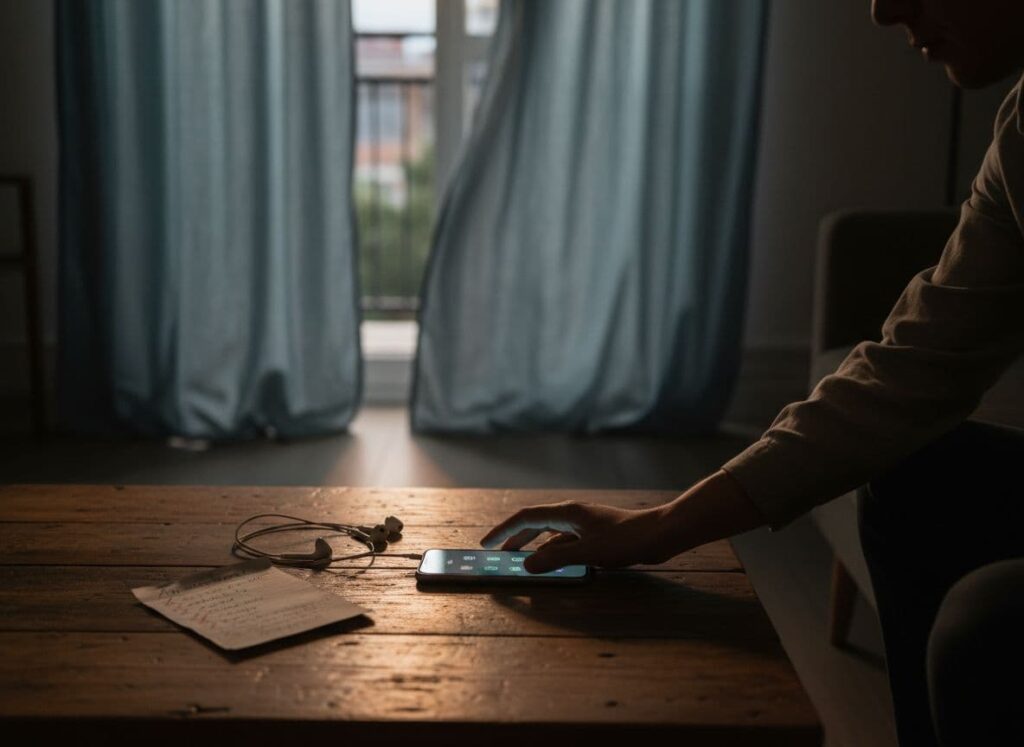
What an overstimulated mind feels like and why it happens
An overstimulated mind isn’t always dramatic. Sometimes it looks like staring at your phone and not taking in a word. Sometimes it’s wanting silence so badly that even normal conversation feels like too much.
The basic reason is simple. Your brain is getting more input than it can sort at once. Noise, light, stress, tasks, messages, decisions, and poor sleep start stacking up. After a while, your body reads all that input like a threat. That’s when you feel tense, scattered, or ready to shut down.
Common signs you may be running on sensory overload
A lot of people recognize the feeling once they see it spelled out:
- Your thoughts race, then stall out.
- You feel jumpy, restless, or on edge.
- Your shoulders, jaw, or stomach stay tight.
- Small annoyances make you snap.
- Simple tasks feel bigger than they are.
- You want to be alone, lie down, or cancel everything.
You might also notice headaches, brain fog, trouble sleeping, or that strange tired-but-not-relaxed feeling. It’s like your body is asking for rest while your mind keeps running.
Everyday triggers that quietly build up stress
Usually, it’s not one huge thing. It’s ten small ones. Constant notifications. Loud places. Bright stores. Too much multitasking. Skipping lunch. Poor sleep. Having to make decisions all day long.
Crowded rooms can do it. So can open browser tabs, background TV, group texts, and trying to answer everyone at once. When there’s no real pause between one demand and the next, your mind stays in “go” mode. That’s why overwhelm can show up even on an ordinary Tuesday.

Simple ways to calm an overstimulated mind right now
When your mind feels flooded, the fastest help often comes from reducing input first. Not solving everything. Not talking yourself out of it. Just turning the volume down.
Start by cutting a little noise. Put your phone on Do Not Disturb for ten minutes. Mute the nonessential chat. Turn off the TV. Let one thing wait. If you want a few practical examples, these low-stimulation practices follow the same idea: less input gives your brain room to settle.
When you’re overloaded, the kindest move is often to remove one thing, not add five more.
Step into a quieter space and give your senses a break
If you can, leave the room for a few minutes. Go to the bathroom, your car, the porch, a hallway, or outside by the mailbox. Close a door. Lower the volume. Let yourself be alone with less coming at you.
That short pause matters. A quieter space tells your body it doesn’t have to process everything at once. Even two or three minutes can soften the sharp edges.
Use your breath to slow your body down
Try one easy pattern: breathe in for 4, then out for 6. Don’t force a huge inhale. Keep it soft. The longer exhale is the part that helps your body ease up a little.
Do that for four or five rounds. If counting makes you tense, skip the numbers and simply make the exhale a bit longer than the inhale. You’re not trying to breathe perfectly. You’re giving your system a slower rhythm to follow.
Let your eyes rest and reduce what you have to take in
Visual input can wear you out more than you realize. Screens, clutter, bright overhead lights, and trying to do three things at once all ask your brain to keep scanning.
So make the scene simpler. Dim the lights. Put one thing away. Look out a window. Close your eyes for a minute if that feels good. Stop multitasking and do one small thing at a time. Less to take in often feels like instant relief.

Gentle grounding habits that bring you back to the present
Once the noise comes down, grounding helps you land. The point isn’t to “clear your mind.” It’s to return your attention to what’s real and right in front of you, your body, the chair, the floor, the next sip of water.
These tools are plain on purpose. They work because they are simple enough to use when your brain is crowded.
Try the 5-4-3-2-1 method when your thoughts feel scattered
This method is helpful when your mind is spinning and you need something concrete. Look around and name 5 things you can see. Then 4 things you can feel, like your feet in your shoes, your sleeve on your arm, the chair under you. Name 3 things you can hear, 2 things you can smell, and 1 thing you can taste.
It pulls your attention out of the storm in your head and back into the room. If smell or taste feels awkward, take a sip of water or notice the air in your mouth. A simple reset routine for overstimulation often comes back to this same idea, reduce input and return to the body.
Drink water or eat something small if your body feels off
Sometimes overwhelm gets worse because your body needs something basic. If you haven’t had water in hours, or you’ve gone too long without food, everything can feel louder and harder.
Try a glass of water first. Then something easy, fruit, crackers, yogurt, toast, nuts, or half a sandwich. You don’t need a perfect snack. You need enough support to stop your body from feeling even more stressed.
Use slow movement to release built-up tension
When you feel overloaded, your body often holds the feeling for you. It sits in the shoulders, chest, jaw, hands, and hips. A little movement helps move some of that pressure through.
Take a short walk without your phone. Roll your shoulders. Stretch your calves against a wall. Do a few gentle yoga poses. Stand up and shake out your hands. It doesn’t need to be a workout. Slow movement reminds your body that it can come down from high alert.

Small daily habits that help calm an overstimulated mind before it builds up
Quick relief matters, but prevention helps even more. A calmer mind usually comes from kinder rhythms, not strict routines. Small daily habits give your brain fewer chances to get overloaded in the first place.
Think simple. Fewer inputs. Better rest. A little more quiet around the edges of your day.
Create one low-stimulation ritual you can repeat every day
Pick one small ritual that feels easy to keep. A quiet cup of tea before checking your phone. Ten minutes on the porch. A short walk around the block. A few lines in a journal. A shower without music or podcasts.
The best ritual is the one that doesn’t ask much from you. It should feel like an exhale, not another task. Repetition helps, because your mind starts to recognize the pattern and settle into it faster.
Protect your sleep and evening hours from extra noise
Evenings set the tone for tomorrow. If your brain gets flooded right before bed, it has a harder time powering down. That’s why late-night scrolling can leave you tired and wired at the same time.
Try softer lighting after dinner. Put your phone down a little earlier. Lower the house volume. Keep bedtime simple and familiar. You don’t need a fancy wind-down routine. You need a gentler landing at night.
Notice your personal triggers so you can soften them earlier
Pay attention to the patterns. Maybe grocery stores drain you. Maybe back-to-back meetings do it. Maybe you unravel around 4 p.m. when you’ve had too much caffeine and not enough food. Maybe family group texts tip you over faster than you admit.
This isn’t about fixing your whole life in one week. It’s about seeing yourself more clearly. When you know your usual triggers, you can step in sooner. You can eat before the crash, leave the noisy place earlier, or build in ten minutes of quiet before the next thing begins.

Conclusion
You don’t need a perfect routine to feel better. To calm an overstimulated mind, small choices count, and they count more than you think. Less noise, a slower breath, a glass of water, softer light, one quiet pause.
If today feels loud, pick one gentle step. Step outside. Turn down the volume. Let your eyes rest. Give yourself a few minutes with less coming at you.
That’s often where calm begins, not in doing more, but in asking less of yourself for a moment.
This post may contain affiliate links. If you make a purchase through these links, I may earn a small commission at no extra cost to you.